1055 points · ajyoon · 1 day ago
civai.orgbeloch
elamje
1. Getting things to space is incredibly expensive
2. Ingress/egress are almost always a major bottleneck - how is bandwidth cheaper in space?
3. Chips must be “Rad-hard” - that is do more error correcting from ionizing radiation - there were entire teams at NASA dedicated to special hardware for this.
4. Gravity and atmospheric pressure actually do wonders for easy cooling. Heat is not dissipated in space like we are all used to and you must burn additional energy trying to move the heat generated away from source.
5. Energy production will be cheaper from earth due to mass manufacturing of necessary components in energy systems - space energy systems need novel technology where economies of scale are lost.
Would love for someone to make the case for why it actually makes total sense, because it’s really hard to see for me!
dathinab
1. every gram you need to send to space is costly, a issue you don't have at ground level
2. cooling is a catastrophe, sure space is cold, but also a vacuum, so the cooling rate is roughly the infrared radiation rate. This means if you are not careful with the surface of a satellite it can end up being very slowly cooked by sunlight alone not including running any higher heat producing component (as it absorbs more heat from sunlight then it emits, there is a reason satellites are mostly white, silver or reflective gold in color). Sure better surface materials fix that, but not to a point where you would want to run any heavy compute on it.
3. zero repair-ability, most long running satellites have a lot of redundancy. Also at least if you are bulk buying Nvidea GPGPUs on single digit Million Euro basis it's not rare that 30% have some level of defect. Not necessary "fully broken" but "performs less good then it should/compared to other units" kind of broken.
4. radiation/solar wind protections are a huge problem. Heck even if you run things on earth it's a problem as long as your operations scale is large enough. In space things are magnitudes worse.
5. every rocket lunch causes atmospheric damage, so does every satellite evaporating on re-entry. That wasn't that relevant in the past, but might become a problem just for keeping stuff like Starlink running. We don't need to make it worse by putting datacenters into space.
6. Kessler Syndrom is real and could seriously hurt humanity as a whole, no reason to make it much more likely by putting things into space which don't need to go there.
Last but not least, wtf would you even want to do it?
There is zero benefit, non nada.
Terr_
Then they work backwards, trying to figure out some economic engine to make it happen. "Data centers" are (A) in-vogue for investment right now and (B) vaguely plausible, at least compared to having a space-casino.
benl
1. The only reason there are 15,000 satellites in space is because SpaceX launched about 9,500 of them (Starlink is 65% of all satellites) on their semi-reusable Falcon 9. If fully-reusable Starship pans out, they will be launching satellites at 10x the rate of Falcon 9 at the very least.
2. You don't need to upgrade the satellites, you just launch new ones. The reason data center companies upgrade their servers is because they can't just build a new data center to hold the new chips. But satellites in space are a sunk cost, so just keep using the existing satellites while also launching new ones.
3. Falling solar panel costs decreases the power costs for both earth-based and space-based, but they're more efficient in space so the benefit would be proportionally greater there.
As I said, I'm skeptical too, but let's be skeptical for good reasons.
tgtweak
For a benchmark - the IIS uses about 4500sqft (420 sqm) of radiators just to keep it's onboard equipment (~70KW) cooled. That's ~150-200 W/sqm.
That means, per GPU, you'd need about 2.5-3.0 sqm of passive radiators.
For a 1MW satellite (~8 datacenter racks of GB200/NVL72) you'd need basically half a football field of bleeding-edge solar panels (that also need to radiate their heat on the reverse side) and a similar sized cooling array of heat radiators for the electronics.
This is on the scale of 40-50 tons - about 10% of the IIS. This should fit on falcon heavy or starship - assuming the solar array and radiators can fold up to fit inside. You could, purely based on weight, launch 2 of these per starship launch.
If you consider the Opex savings (electricity, rent, facilities maintenance) and putting 2 of these on a single starship launch, I still think the ROI would be too long. You're saving about ~$1M per year in Opex but it's costing you $25M to launch it into space and likely an extra ~$50M in satellite equipment (based on starlink satellite costs) on top of the compute. Will those GPUs still be useful in 10 years? Probably not.
I don't think the math is there that justifies the free electricity - even at gigawatt scale (thousands of satellites mass-produced) and at a dramatically lower cost per satellite and per launch. Getting costs down on this would involve tightly integrating the compute and the satellite hardware which would make upgrading the compute independently from the cooling/power infrastructure in the future a significant challenge.
sinuhe69
- In the EU, the ASCEND study conducted in 2024 by Thales Alenia Space found that data center in space could be possible by 2035. Data center in space could contribute to the EU's Net-Zero goal by 2050 [1]
- heat dissipation could be greatly enhanced with micro droplet technology, and thereby reducing the required radiator surface area by the factor of 5-10
- data center in space could provide advantages for processing space data, instead of sending them all to earth. - the Lonestar project proved that data storage and edge processing in space (moon, cislunar) is possible.
- A hybrid architecture could dramatically change the heat budget: + optical connections reduce heat + photonic chips (Lightmatter and Q.ANT) + processing-in-memory might reduce energy requirement by 10-50 times
I think the hybrid architecture could provide decisive advantages, especially when designed for AI inference workloads,
Starman_Jones
stevep98
gemini says that the NVIDIA DGX H100 is 130kg and takes 11kW.
It says space-based radiators in the 100kW range are approx 15kg per kW. And space-based solar panels are approx 1kg per kW.
So let's says we're talking about 1 system that bundles 9 DGX H100's. That's 1.2T for the computing system, 1.5T for the radiator, 100kg for the solar panels, and let's say 2T for the propulsion, propellant, guidance, and all the other spacecraft stuff. That's a total of about 5T, and the radiator is just about 20% of the mass budget.
The power radiated is proportional to the 4th power of the temperature, so they would be incentivized to develop a heat exchanger with a high temperature working fluid.
lambdaone
If you want to radiate away the heat, you are either limited by the Stefan-Boltzmann equation which requires extraordinarily large radiators at any reasonable operating temperature, or have to develop a "super-Planckian" radiator technology, something which while it may be theoretically possible doesn't seem to actually exist yet as a practical technology.
The only other plausible technology I can think of would be to use evaporative or sublimation-based cooling, but that would consume vast quantities of mass in the process, every bit of which would have to be delivered to space first.
Has anyone seen any published work that suggests it is actually anywhere near economically feasible to dissipate megawatts of power in space, using either these or any other technology?
devin
xyzsparetimexyz
jtrn
I too don't think it's currently a sensible solution. But the author completely unable to make a proper case. For instance, just to refute that one claim, there are many reasons to do it in space even at an cost.
Space-based data centers provide an off-world backup that is immune to Earth-specific disasters like earthquakes, floods, fires, or grid collapses. Servers in orbit are physically isolated from terrestrial threats, making them safe from riots, local warfare, or physical break-ins.
Moving infrastructure to space solves local community disputes by removing the strain on residential power grids and freeing up land for housing or nature. Space data centers do not deplete Earth’s freshwater supply for cooling, unlike terrestrial centers which consume billions of gallons annually.
Solar panels in orbit can access high-intensity sunlight 24 hours a day without interference from clouds, night, or the atmosphere.
Data stored in space can exist outside of national borders, protecting it from seizure, censorship, or the legal jurisdiction of unstable governments. Data transmission can be faster in space because light travels roughly 30% faster in a vacuum than it does through fiber optic cables.
Processing data directly in orbit is necessary for satellites and future space stations to avoid the delay and cost of beaming raw data back to Earth
bs7280
The moon has:
- Some water
- Some materials that can be used to manufacture crude things (like heat sinks?)
- a ton of area to brute force the heat sink problem
- a surface to burry the data centers under to solve the radiation problem
- close enough to earth that remote controlled semi-automated robots work
I think this would only work if some powerful entity wanted to commit to a hyper-scale effort.
blauditore
Apart of that, I do agree that space data centers are probably just a marketing stunt at this point, although some things could obviously be done to increase their chances, like more lightweight designs on GPUs, something that was never a big topic before.
phire
And nobody ever calls them out on it.
Today's data centres are optimised for reliability, redundancy, density, repairability, connectivity and latency. Most of advertised savings come not from placing the data centre in space, but the fact that advocates have argued away the need for absolutely everything that modern data centres are designed to supply, except for the compute.
If they can really build a space data centre satellite for as cheap as they claim, why launch it? Just drive it out into the middle of the desert and dump it there. It can access the internet via starlink, and already has solar panels for power and radiators for cooling. IMO, If it can cool itself in direct sunlight in space, it can cool itself in the desert.
The main thing that space gains you over setting up the same satellite in the desert is ~23 hours of power, vs the ~12 hours of power on the ground. And you suddenly gain the ability to repair the satellite. The cost of the launch would have to be extremely cheap before the extra 11ish hours of runtime per day outweighed the cost of a launch; Just build twice as many "ground satellites".
And that's with a space optimised design. We can gain even more cost savings by designing proper distributed datacenter elements. You don't need lightweight materials, just use steel. You can get rid of the large radiators and become more reliant on air cooling. You can built each element bigger, because you don't have to fit the rocket dimensions. You could even add a wind turbine, so your daily runtime isn't dependant on daylight hours. Might even be worth getting rid of solar and optimising for wind power instead.
An actual ground optimised design should be able to deliver the same functionality as the space data centre, for much cheaper costs. And it's this ground optimised distributed design that space data centres should be compared to, not today's datacenter which are hyper-optimised for pre-AI use cases.
-------------------
Space data centres are nothing more than a cool Sci-Fi solution looking for a problem. There have been mumblings for years, but they were never viable (even bitcoin mining was a bit too latency sensitive). Space data centre advocates have been handed a massive win with this recent AI boom, it's the perfect problem for their favourite solution to solve.
But because it's a solution looking for a problem, they are completely blind to other solutions that might be an even better fit.
virtualhat
* They assume 1 satalite = 1 GPU. This is quite funny, actually. A single H200 floating in space with a solar panel and an antenna. In reality, a satellite would pack as many chips as the heat/power allows. A Starlink-sized satellite should be able to hold 40 or so chips. There's no reason why a larger satellitte couldn't hold, say, 1024. * They mention training, but sampling is what makes sense here. Training is a different beast, and requires high reliability, high bandwidth, low latency, and a lot of IO. Space would not be ideal for this. I'd expect training to remain terrestrial and just do sampling in space. (FWIW, sampling will be most of the compute allocation). * Also, no one upgrades GPUs in datacenters, they just add new nodes and leave the old ones there. Google still has their P100 nodes running. Not being able to fix them, though, is a significant concern.
antonymoose
To that end, a small data center space isn’t about unit-economics, it’s a bigger mission. So the question we should consider is what can we put into space the further that mission. Can we put a meaningful sum of human knowledge out there for preservation? It sounds like “yes,” even if we can’t train ChatGPT models out there yet.
Bender
If the AI data-center used only 10MW then each could have two redundant SMR's assuming the cooling challenges have been worked out but then we could have nuclear reactor disposal and collision issues.
tgbugs
I've heard stories that over a decade ago teams inside hyperscalars had calculated that running completely cryogenically cooled data centers would be vastly cheaper than what we do now due to savings on resistive losses and the cost of eliminating waste heat. You don't have to get rid of heat that you don't generate in the first place.
The issue is that at the moment there are very few IC components and processes that have been engineered to run at cryogenic temperatures. Replicating the entirety of the existing data center stack for cryogenic temps is nowhere near reality.
That said, once you have cryogenic superconducting integrated circuits you could colocate your data centers and your propellant/oxidizer depots. Not exactly "data centers off in deep space" since propoxd tend to be the highest traffic areas.
yawniek
trashb
Asside from the other excellent comments on power consumption, cooling and radiation. One point I didn't see being made in the comments much is maintenance costs.
Now I don't find myself in the facility of a data center often in daily life, however I do know that medium to big data centers require 24/7 hardware replacement. I believe this is what those 5 guys with the bikes and scooters are doing in every data center. That would be very difficult, near impossible in space (with the current space fairing infrastructure).
b00ty4breakfast
rybosworld
And some of us are reading these things and trying to be polite.
But at some point patience runs thin and the only response that breaks through the irrationality is some variation of "what if unicorns and centaurs had teamed up with Sauron?"
The limit of the ratio of useful:useless "what if's" approaches zero.
andix
The self-driving car worked too well. Tesla is promising that for over a decade now, and still can't deliver. They came much closer to the goal, but are still very far away from it. Shareholders don't seem to care.
SilverBirch
Is this all an effort to utilize more efficient solar panels? Are solar panels really the limiting factor for data centres?
dhab
This might also be a new vehicle to mask any space warfare technology deployments.
izzydata
tpurves
Maybe there's a very latency sensitive need to send realtime targeting information to a tomahawk missile in flight? But it's also too bandwidth, compute or cost intensive to send a firehose of raw spy-satellite data to a disposable one-way attack munition?
The data centers in space are actually for the spy satellites to use. That's all I got for practical applications.
cryptonector
Yeah, space is cold, but also you don't have access to large thermal masses with which to exchange heat, so the fact that space is cold does not help much.
In space the only option for cooling is large radiators. If you had a data center in space you'd need enormous radiators -- much larger than the data center itself.
(On Earth we can exchange heat with the environment, and the environment includes convection and the water cycle and ultimately can expel excess heat via high altitude condensation of water vapor where most of the heat released escapes to space. As well clouds can both block insolation as well as keep heat below trapped, but altogether between high altitude condensation and blocking insolation this is the mechanism by which Earth keeps its temperature as a random walk around the average that we enjoy.)
RobotToaster
mchusma
PS. I think the authors argument that millions of satellites might run into each other is silly. There are like 1.5 B cars.
Eggpants
The biggest problem folks had was even with equipment with 99.9% reliability something breaks every day due the huge raw number of devices involved. And most network equipment is not any where close to being radiation hardened.
I had some fun with it with Bezo’s fist bumping folks because SpaceX was cleaning BlueOrigin clock.
I talked to one of their lawyers and didn’t hear anything afterwards. I left AWS and a couple of years later Amazon announced AWS ground station. I wonder how much my paper contributed to green lighting that project.
niemandhier
You cannot do two things at the same time:
1. Make electronics small. 2. Make electronics radiation resistant.
It’s a numbers game. The denser things are packed, the higher the probability that a random high energy particle or ray will damage something.
20 years ago NASA was buying old chips, because those were less susceptible, modern “radiation hardened by design” chips are better than those, but still slower than those for planetary use.
loourr
Even if it's more expensive, Spacex will be able to deploy hardware when no one else can because all the gas turbines and existing power plants have been exhausted and the lead time to build new ones is 5+ years out because of the bureaucratic overhead.
1970-01-01
2001zhaozhao
ineedasername
If you're looking at this and saying "Lol, no, we don't need data centers in space just to power more GPT sycophancy and some health insurance company's RAG workflows." Then you're right, so just move on from that usage and consider the things we'd like to do in space, and especially the things we're already doing but want to do more of.
I know, my gut was telling me this is ridiculous, premature at best even through the lens of expanding space industry. But then with respect to the need for data centers-- had I even thought about it a year ago, my gut would have laughed if someone had said "Buy Wester Digital, HDD's are a growth stock".
abalone
However one flaw in this critique is that is only looks at the cost of ground-based solar panels and not their overall scalability. That is, manufacturing cost is far from the only factor. There is also the need for real estate in areas with good sun exposure that also have sufficient fresh water supply for cleaning.
When we really consider the challenges of deploying orders of magnitude more terrestrial solar, it really requires a more detailed and specific critique of the orbital vision. Positive includes near continuous solar exposure (in certain orbits) and no water requirements.
Much has been said of cooling but remember, there is a lot of literal space between the satellites for radiative cooling fins. It is envisioned they would network via optical links, and each mini satellite would be roughly on the order of a desktop GPU (not a whole data center rack). The vision is predicated on leveraging a ton of space for lots of mini satellites on the order of a Dell desktop tower. The terrestrial areas that are really cold are also not that great for solar exposure.
Personally I don't know how it will play out but the core concern I have about making these kinds of absolutist predictions is they make weak assumptions about the sustainable scalability of terrestrial power. And that is definitely the case here in that it only looks at the manufacturing cost of solar.
zippyman55
wkoszek
https://www.nextbigfuture.com/2022/02/spacex-reusable-rocket... -- looks like target price for Starship launch would be $3--$5m according to the author.
Wouldn't the /kg price to SpaceX be:
3000000/100000 = $30/kg -- 5000000/100000 = $50/kg?
If they recover everything and produce fuel at scale, wouldn't it drop the cost even more.
What many people quote here are commercial rates, I think. SpaceX won't pay those prices.
Can someone check my math
NathanKP
If you assume that these people aren't completely stupid, then there is some reason why they want this workload running at great physical distance from all the people down on Earth. It's probably not to protect people on Earth. After all they'll happily deorbit satellites and other junk from orbit and let it rain down on us. And they will happily destroy the environment with all those rocket launches too. Therefore it must be to protect the workload from us.
What is a workload that is something that people would probably want to destroy, and which would also provide enough value to offset the expense to launch and run in space? The only thing that might make sense is a military AI platform. Think something that observes Earth, launches missiles, and controls terrestrial drone armies remotely, with relatively low latency.
It gets built and launched thanks to endless military budget, and once it is up there, running such an AI from space means that effectively the only people who can take it out are nation state level foes who can launch rockets into low earth orbit. And this thing is a satellite, probably part of a network that is watching the Earth all the time. Start building something that looks like a rocket launch site, and the AI will see, then you get hit by a missile or taken out by a drone first before you get a chance to attack the platform.
It sounds like sci-fi, but in the future, if we let it happen, there could absolutely be nearly invulnerable autonomous AI platforms in space overseeing everything, and making decisions, and issuing commands. Of course there could still be a massive solar flare event, or a Kessler syndrome event that releases us all from AI enforced servitude. Anyway, it's a not so fun thought experiment, and let's hope this stays sci-fi, so we can just enjoy a fun Hollywood film about this rather than experiencing it firsthand.
rushingcreek
Nvidia GPUs, particularly H100s, have a failure rate orders of magnitudes higher than traditional CPU-only hardware. I myself have accidentally melted an H100 during a large-scale training run.
While it’s trivial to replace a broken GPU in the ground, it seems to be infeasible in space during the life of the satellite. Getting a human or robot “fixer” spacecraft to it would likely cost more than the $30K GPU itself.
furyg3
Tesla's valuation has been nuts for a while. The music was going to stop playing at some point, so something something robotaxis, something something androids, something something AI. Keep the investors duped while you can move money around and leverage it to stay relevant.
Cars are out, social media as well (especially X), but Space is still in, and even more so AI. So let's move the cost center with world domination potential (AI) over to the one company that's making money and has a still has a cash-out potential via an IPO.
I'm just so tired of it all. I actually think 'boutique' businesses (companies that generate real value to real users and are profitable now) are the only thing that can save our economy medium-term, but investors and the government are having none of it. And the result is that these bait-and-switch scams will continue.
TGower
kevin061
xrd
cdf
Then he talked about datacenters in space and this is something I have some appreciation for, and I immediately knew he couldnt have done much Physics, and sure enough, I was right.
There are "experts" out there who basically have no idea what they are talking about, "it is absolute zero in space in the shadow!", as though radiative cooling is that effective.
And that's not even talking about part failures. How do we replace failed parts in space? This is a scam, but everybody is afraid to openly challenge eloquent "experts" who are confidently wrong.
[deleted]
danieljanes
pranavm27
maxdo
What they are trying to do is an a very ambitious engineering challenge in several highly integrated domains, from spaceships to robotics, gpu, server design , ai. Typical stakes are high margins are high.
Project also pushes boundaries of what human can do the same way starlink did. 20 years ago starlink scale was also an "impossible" thing. Is it possible now to push one gpu and serve it from space? Yes, can you do it at scale? Big question.
Obstacles :
Price per kg to orbit. They aim to go from $150 to $10 per kg. Can they deliver? Big question, but having something that demands so many starship, like GPU heavy tasks, will help them achieve this goal. Benefits? No rent, no cooling issues, cheap sun-powered electricity 24 hours a day, unlike anywhere else on Earth.
Jurisdiction. Servers can't be shut down or taken away by police, etc.
Cooling. Yes, it's a vacuum, but with $10 per kg, you can deliver pipes and coolant, and since you don't have space constraints, you can build these pipes with a robot, making that datacenter extremely cheap.
3. Labor. If a robot can do primitive tasks combined with design that is fully remote, you labor costs goes almost to 0.
the output: with $10 per pg, delivering solar panels, coolant + robot for some urgent fixes. Robots even with current technology can swap a harddrive for example, especially if hardware is built to be mantained by robots not human. You don't need large construction, you invest into design, that once assembled , cost you maybe comparable amount of hardware to deliver. After that it runs for free!
The economy if this obviously beating anything exised on earth.
stronglikedan
reilly3000
I think it’s all farce and technically unsound, but I also think that grok-5-elononly is a helluva drug. It’s really got him ready to rally investors behind “spreading the light of consciousness to the universe”. Oh to see the chat logs of their (Elon and his machine girlfriend)’s machinations.
wendgeabos
then anything that drives money towards your work on that goal is worth pursuing particularly if you think time is short.
Nevermark
But heat radiation rates are proportional to temperature to the 4th power!!!!
That is a magical law. The quality of heat pumps used to concentrate heat, will drive the economics and structure of heat dissipation.
Seldom do we get constraints that favorable to work with.
pokstad
Author made a fatal mistake. By flying enough hardware in space, you can simply blot out the sun and steal their solar capacity. Drink their milkshake with a long straw!
[deleted]
amelius
IFC_LLC
Listen, I totally agree, the tech makes absolutely no sense. It does not. But the fact that someone is willing to spend money on figuring this out is pretty good. The worst thing is going to happen, we'll have a cheaper space travel. And let the guys to have the first hit at it, wasting money on an enormous amount of research needed.
Ain't my money being spent.
As long as we don't have to use Russian rockets to send the US payload to the orbit, I'm cool with it.
mrandish
I'm no expert on solar but I thought there was some upper limit on how much power ground-based solar panels can generate per area based on how much energy gets through the atmosphere all the way to ground - and that panel efficiency was approaching that limit.
However, I don't doubt ground-based panels can continue to improve in cost and other metrics and thus exert competitive pressure on space-based solutions.
perfmode
While technically not impossible, the space data center vision appears primarily designed to support SpaceX’s anticipated mid-2026 IPO and justify a $1.5 trillion valuation rather than solve near-term compute constraints.
alkonaut
These companies wanted to merge for financial reasons and the invented reason is nonsensical. We shouldn't even give the nonsensical reason the benefit of trying to make sense of it.
kabdib
And hardware that is happy in high-radiation environments is not going to be fast.
JumpCrisscross
I'm taking the parts of this write-up I don't have expertise with a grain of salt after seeig this.
Kessler cascades are real. Particularly at high altitudes. They're less of a problem in LEO. And in no case can they "[cripple] our access to space." (At current technology levels. To cripple access to space you need to vaporise material fractions of the Earth's crust into orbit.)
arjie
The answer to that is that coordination problems are really hard. Much harder even than what are currently unsolved engineering problems. In fact, SpaceX can only launch from California because they have DOD coverage for their launches. Otherwise the California Coastal Commission et al. would have blocked them entirely. Perhaps the innovation for affordable space Internet is combining it with mixed-use technology.
The truth is that in America today self-driving cars (regulated by a state board run by bureaucrats) are easier to build than trains (regulated by every property owner on the train route). Mark Zuckerberg tried to spend some money evaluating a train across the Bay and had to give up. But Robotaxi service is live in San Francisco.
So if there is an angle that makes sense to me it's that they anticipate engineering challenges beatable in a way where regulatory challenges are not.
rishabhjain1198
This statement is actually completely false. The bottleneck is not cost of building data centers, but the energy accessible on the planet. How much we're willing to pay for increasing that is currently very unclear, but it's far more than the current cost of building a terrestrial data center.
As Jensen Huang famously touted their performance per watt, saying "Our customers won't buy our competitor's chips even if they were free."
nvader
As an alleged human, I'd like to preserve my option to interfere.
typ
Given the solar constant 1361 W/m^2, you can calculate the temperature range based on the emissivity and absorptivity. With the right shape and “color”, the equilibrium temperature can be cooler than most people thought.
I suppose that a space data center powered 100% by solar is no different than this iron ball in principle.
xorcist
jstummbillig
Ekaros
[deleted]
cowthulhu
JKCalhoun
We're living in the Age of Distraction… amusing ourselves to death (as usual).
jhoechtl
Space is cold but has little mass. Either heat can radiated or transfered. To transfer heat, mass which easily absorbs heat is required. The moon might be suitable for that.
sp4cec0wb0y
taf2
what am I missing here?
MBCook
They make no sense otherwise.
The only other thing I can think of is the whole thing is just a scheme to get investment and they’re never going to actually go through with it.
At this point I kind of think the former is more likely.
nemo136
This is while they try to find a solution to earn money with it.
JackYoustra
"Just change the law" ok sure we'll get right on it.
Zanni
Reusable rockets make no sense.
Autonomous cars make no sense.
Data centers in space make no sense. <--- You are here.
Humanoid robots make no sense.
[deleted]
elvircrn
[deleted]
Garlef
alcomatt
pftburger
hk1337
MithrilTuxedo
Putting data centers in space keeps them out of reach of humans with crowbars and hammers, which may have been a vulnerability for those robots Tesla is building.
qoez
No? You'd only need one with lots of gpus on the ship at the same time
rando77
But general purpose compute no
gadders
"So here's what I did. I built a simple model that reduces the debate to one parameter: cost per watt of usable power for compute. The infographic below lets you change the assumptions directly. If you disagree with the inputs, great. Move the sliders. But at least we'll be arguing over numbers that map to reality.
The model is deliberately boring. No secret sauce. Just publicly available numbers and first-principles physics: solar flux, cell efficiency, radiator performance, launch cost, hardware mass, and a terrestrial benchmark that represents the real alternative: a tilt-wall datacenter sitting on top of cheap power. "
"Here's the headline result: it's not obviously stupid, and it's not a sure thing. It's actually more reasonable than my intuition thought! If you run the numbers honestly, the physics doesn't immediately kill it, but the economics are savage. It only gets within striking distance under aggressive assumptions, and the list of organizations positioned to even try that is basically one."
tschellenbach
InsideTehMatrix
est
estomagordo
[deleted]
seydor
Snoozus
nickorlow
- have very non-deterministic latency
- are located outside of a country that can protect you (ie China could disrupt your space data center)
- have to pay millions of dollars to swap out hardware
cornonthecobra
zemaj
ortusdux
slackerIII
Anyone planning expenditures as large as a modern data center thinks about all kinds of risks (earthquakes, climate, power, etc), and so perhaps there is a premium for GPUs that are out of the reach of your median angry unemployed guy.
(yes, this is nuts, but I can easily imagine some fever-dream pitch meeting where Musk is talking about it)
sollewitt
You do this when the most fragile part in the system fails. Solar panels good for 25 years but the SSDs burn out after 2? Incinerate the lot!
This kind of thinking is late capitalist brain rot. This kind of waste should be a crime.
chias
https://pluralistic.net/2024/05/17/fake-it-until-you-dont-ma...
zouhair
timmmmmmay
pointlessone
To me it looks like the next Musk’s grift. Remember Mars? Have you heard about it recently? He threw it to the Internet and everyone got excited for a minute. Then nerds did quick math and it didn’t make any sense. And so everyone forgot about Mars. This is the same. Hype everyone up for a week or two to inflate stock before the merger/purchase/IPO/whatever. That is all.
Jabrov
running101
NedCode
rolph
entirely out of jurisdiction, where it is prohibitively expensive to travel, and impractical for any physical seizure.
you dont need to compute, just store it and P2P amongst satellites.
essentially an orbital NAS.
yazaddaruvala
Datacenters in space is ambiguous enough to mean on lunar soil which provides plenty of heat dissipation using geothermal heat pumps.
Similarly mass to orbit is also less problematic if silicon factories (including the refineries) are built on lunar soil as well.
OsamaJaber
gordian-mind
1) Kessler syndrome is a contingency.
2) This is a logistics issue, not a physical impossibility.
3) Those are different tradeoffs (solar in space). There is not really an argument there.
All in all this is extremely weak reasoning, which is quite the contrast with the definitive title.
I throw this to the "nerds need to feel smarter than Elon" pile of articles. :)
ZebusJesus
https://climatecosmos.com/sustainability/how-close-are-we-to...
[deleted]
indycliff
Rover222
It never fails here. Ya'll are soooo determined to assume ulterior motivations. He has always been direct about his motivations, whether it's about politics or business decisions.
To suspect his whole plan for datacenters in space is a ruse or something to drive up some stock price (or whatever), is... just ridiculous. You really think they person who leads SpaceX (more satellites than the rest of the world combined) and Xai (with a competitive frontier model in 2 years starting from scratch), and Tesla (more inference compute than any company on Earth) really knows less than you about the math and physics of this idea??
His immediate focus for Starship has shifted from Mars colonisation to exponential expansion of intelligence, as he thinks it's the best path to extend consciousness. Ridiculous or not, he believes that, and that's the motivation.
utopcell
PunchyHamster
Current satellites get around 150W/kg from solar panels. Cost of launching 1kg to space is ~$2000, so we're at $13.3(3)/Watt, that just power, let's assume that cooling will cost us same per kg, the same amount need to be dissipated so let's round it to $27
One NVidia GB200 rack is ~120kW. To just power it, you need to send $3 240 000 worth of payload into space. Then you need to send additional $3 106 000 (rack of them is 1553kg) worth of servers. Plus some extra for piping. We're already at $6.3 mil a pop for just hauling it up to orbit, with no cost of solar cells included
I'd imagine comparable hardware for just some solar + batteries on ground is around $200k. I dunno where the repeated 5x cost number comes from. I suspect whoever pushed it was just lying
[deleted]
[deleted]
jiggawatts
    1. Inference
    2. Training
Training is a whole other ballgame. It is parallelisable, sure, but only through heroic efforts involving fantastically expensive network switches with petabits of aggregated bandwidth. It also needs more general-purpose GPUs, access to petabytes of data, etc. The name of the game here is to bring a hundred thousand or more GPUs into close proximity and connect them with a terabit or more per GPU to exchange data. This cannot be put into orbit with any near-future technologies! It would be a giant satellite with square kilometers of solar and cooling panels. It would certainly get hit sooner or later by space debris, not to mention the hazard it poses to other satellites.
The problem with putting inference-only into space is that training still needs to go somewhere, and current AI data centres are pulling double-duty: they're usable for both training and inference, or any mix of the two. The greatest challenge is that a training bleeding edge model needs the biggest possible clusters (approaching a million GPUs!) in one place, and that is the problem -- few places in the world can provide the ~gigawatt of power to light up something that big. Again, the problem here is that training workloads can't be spread out.
Space solves the "wrong" problem! We can distribute inference to thousands of datacentre locations here on Earth, each needs just hundreds of kilowatts. That's no problem.
It's the giaaaant clusters everyone is trying to build that are the problem.
notepad0x90
1) Water scarcity and energy scarcity here on earth
2) It will drive down launch costs and promotes investment in orbital facilities and launch capabilities.
those two reasons alone are enough.
wewewedxfgdf
_HMCB_
dumbfounder
ppeetteerr
random_duck
deafpolygon
First mover advantage, and all.
sam_goody
BUT the fact that we are even arguing about whether or not we should be putting data centers into space is so incredibly absurd to someone who watched the Challenger explode and assumed that space wouldn't be ventured into again in my lifetime.
People don't realize how much the priors have changed. Take a minute to appreciate that. We are living in a world where people are debating if it makes sense to spend a bazillion dollars to put a hard disk into orbit.
I wonder if the Klingons are good at cyber warfare.
mxfh
Adding a global UHVDC grid to even out dips in local PV performance due to cloud cover and the diurnal cycle on spaceship earth seems to be magnitudes cheaper and scaleable than this loony pitch.
The only thing making this hard is requiring supranational collaboration.
UltraSane
fuzzfactor
Joker_vD
I mean, I still remember promises of $1000-per-kg for space launches, and how e.g. Gigafactory will produce half of the world battery supply, and other non-scientific fiction peddled by Musk. Remember when SpaceX suggested in 2019 that the US Army could use its Starship rockets to transport troops and supplies across the planet in minutes? I do. By the way, have they finished testing Starship yet, is it ready?
kibwen
retube
- Data centres need a lot of power = giant vast solar panels
- Data centres need a lot of cooling. That's some almighty heatsinks you're going need
- They will need to be radiation-hardened to avoid memory corruption = even more mass
- The hardware will be redundant in like 2 years tops and will need replacing to stay competitive
- Data centres are about 100x bigger (not including solar panels and heat sinks) than the biggest thing we've ever put in space
Tesla is losing market share (and rank increasingly poorly against alternatives), his robots are gonna fail, this datacentre ambition needs to break the laws of physics, grok/twitter is a fake news pedo-loving cesspit that's gonna be regulated into oblivion. Its only down from here on out.
garettmd
GPT-4o mini: The term for financial moves where new investors are continually recruited to pay off previous ones is often referred to as a "Ponzi scheme." Another similar term is "pyramid scheme," where returns are paid to earlier investors from the contributions of newer investors, but with a structure that typically requires participants to recruit others to earn returns. Both schemes are unsustainable and illegal.
lisp2240
septune
andsoitis
wanderinghogan
t312227
as always: imho. (!)
we already had this topic before, an example for another good article regarding physical arguments against this idea would be:
"Datacenters in space are a terrible, horrible, no good idea" ~ late 2025
* https://taranis.ie/datacenters-in-space-are-a-terrible-horri...
TL;DR: It's not going to work.
idk ... maybe elon has something else in mind with this merger!?
cheers,
a..z
briandw
formvoltron
Does not feel like a vibe.
zer00eyz
https://www.pbs.org/newshour/world/pentagon-embraces-musks-g...
Data centers in space make absolute sense when you want as close to real time analysis on all sorts of information. Would you rather have it make the round trip, via satellite to the states? Or are you going to build these things on the ground near a battlefield?
Musk is selling a vision for a MASSIVE government contract to provide a service that no one else could hope to achieve. This is one of those projects where he can run up the budget and operating costs like Boeing, Northrup etc, because it has massive military applications.
cbeach
My take-away is - SpaceX is still an extremely good stock to hold. However, the stupid money will buy the stock at IPO on the promise of space datacentres.
When SpaceX inevitably u-turns on this plan and the stock plummets temporarily, THAT will be a good time to buy in.
BiteCode_dev
jongjong
Besides this, it's concerning how much stuff we're sending to space. One day we'll have to start worrying about satellite parts falling on us.
varispeed
inglor_cz
I suspect that Musk wants to build space data centers in order to mitigate political and societal problems, which may yet prove more intractable than cooling in space.
The current expansion of terrestrial data centers has already caused a huge backlash. Their adversaries may well try to regulate them out of existence, at least locally. If an important jurisdiction like California or Germany subjects building of new data centers to regulations similar to building, say, a new nuclear power station, they will achieve a de-facto stop on further development there even without banning them outright.
Space, while not entirely lawless, is much harder to regulate this way. Local authorities have no power over it, nor do governments of nations without space capabilities. Big authorities of big nations (the FAA etc.) do, but they will likely be more friendly to already established launch businesses like SpaceX, not least because of the geopolitical dimensions of having a vibrant space sector.
From Musk's POV, this may be worth the additional cost and technical troubles.
1vuio0pswjnm7
What does "serious" mean
monocasa
If the nodes are spinning around the earth at orbital velocities, then all the benefits of physical locality are thrown out the window.
aeon_ai
[deleted]
fsloth
shishcat
numpad0
Is that possible in our lifetime? I'd be optimistic about that. Can SpaceX pull that off? Space what? ...
DustinBrett
quantum_state
wrs
cess11
The author forgot to add that this is only true from the perspective of their own bias.
To someone else it might make a lot of sense, e.g. someone who expects militant resistance to the "data centers" from the general public or some other actor that is highly unlikely to achieve space capabilities.
exe34
Juliate
Where is the tech?
foxglacier
Also why talk about training not inference? That needs data centers too and could be what they're intending to do.
So this post is clearly not an effort to objectively work out the feasibility but just a biased list of excuses to support the author's unsubstantiated opinion.
alfiedotwtf
I’d even bet that when they do IPO, there will be ZERO mention of “space data centres” in the prospectus!
HardCodedBias
The regulatory framework is getting more and more difficult for data centers.
The options are move to countries with less of an uphill regulatory burden (UAE?), but this comes with other issues.
Space it is.
7e
kittikitti
moomoo11
hahahahhaah
_DeadFred_
gowld
The website insists that you let it record your voice in order to show you the dangers of AI. Is it trolling the visitor? https://civai.org/talk
bamboozled
j45
Taking a creative step back, perhaps datacenters in space support something with Mars?
As much as that might not seem realistic, I also have to counterbalance it with operationalizing and commercializing SpaceX, Starlink and Tesla relatively quickly when so much stays at the R&D stage for so long.
OrvalWintermute
Engineering is always a question of tradeoffs.
Launch costs are dropping, and we’re still using inefficient rockets. Space elevators & space trains, among others, can drop this much more, the launch costs are still dropping, even using rockets, maybe we’ll never get to elevators & trains the costs will drop so low!
Radiation shielding is not required for VLEO or LEO, and phenomenally more capable aerospace processors are near - hi Microchip Inc! There are many other radiation solutions coming, no doubt with nuclear power.
Satellites can be upgraded at scale, though for many things, it does not make $ sense to upgrade them, but fuel , reaction wheels, solar panels, among other things do make $ sense to replace.
Latency was technically solved in 1995 & 2001 with the first laser comms missions NASDA’s ETS-VI kiku-6 and ESA’s Artemis , and Laser crossbars for comms are common. A full laser TDRS no RF is not yet extant but soon. Earth to deepspace was just demonstrated by ESA.
Cooling can be significantly improved due to lower launch costs, heat piping, RTGs, TEGs, and thermoradiative cells, not to mention sunside solar and darkside inline radiators
Furthermore, it is very likely that as neuromorphics with superior SWaP emerge, we could see very different models of space based computation.
Economic tradeoffs should drive many of these decisions as I’m not discussing the other applications of datacenter in space
redwood
iancmceachern
Just do the basic thermal heat transfer math.
fd-codier
krick
quirkot
colordrops
krater23
ck2
How's that full-self driving promised for decades working out?
How's the destruction of USAID working out (oh you wouldn't know a million dead now)
We already have a data-center in space, sort-of, here's how many radiation panels it has to deploy for just the heat produced from the small number of low-power computers
* https://i.sstatic.net/cpIBo.jpg
(ISS, all those white panels are thermal heat radiators)
kgwxd
gostsamo
This is BS, everyone knows that this is BS, but because this is Elon, there are still people who don't call out the BS.
It might be distraction, he might be delusional, he might be asking his investors to stop asking for profit by giving them shares from SpaceX, but this is not him discovering new physics.
luxuryballs
[deleted]
wat10000
Seems like a pretty obvious "no" to me. Loudoun County is a much better choice, just to pick one alternative. Antarctica is an awfully inhospitable place and running a data center there would be a nightmare.
And yet it's way better than space. It's much easier to get to. Cooling is about a thousand times easier. The radiation environment is much more forgiving.
This whole concept is baffling to me.
(Incidentally, a similar thought experiment is useful when talking about colonizing Mars. Think about colonizing the south pole. Mars is a harsher environment in just about every way, so take the difficulties of colonizing the south pole and multiply them.)
mrcwinn
[deleted]
egorfine
What matters is that investors and shareholders love to hear about future space data centers.
Obligatory /s.
heisenbit
groundzeros2015
You can’t read a 300 word article in 1930 and know that a formula 1 engine could not be built.
ozim
Disagree there are bunch of scenarios where Data Centers in space make sense. Like nuclear annihilation and having vaults across the globe to communicate and get back lost information because ground data centers would be wiped out by EMP from blasts.
wmf
(If you can't xcancel it yourself your hacker card is revoked.)
ww520
hermitShell
As most engineers realize right away, it is not going to be profitable to operate a regular datacenter in space, per the article (and I agree), so something else is going on here. Almost all the discussion is about feasibility, which is not by itself going to explain the situation.
It is clearly somewhat feasible to build Starlink level infrastructure and operate it profitably. I would posit that the narrative is a funding vehicle for a more conservative, incremental objective.
The very fact that the infrastructure is in space places the datacenter on the legal and geopolitical high ground. It's hard to raid servers if they are in orbit. It's hard to disable, audit, or arm-wrestle into submission. It doesn't have to have the scale we've come to expect in 2026 to be useful. And it's for inference, not training, of course. Useful levels of inference is computationally cheap. There are implications with the financial system as well.
In combination with PLTR technology, what I see is another intelligent and strategic move by Musk to enable and be part of hegemony. He is a central player not making decisions in isolation. They are playing a game with different rules, and therefore different unit economics.
sheepscreek
Put those three together and maybe it’s possible to push physics to its limits. Faster networking, maybe 4x-5x capacity per unit compared to earth. Servicing is a pain, might be cheaper to just replace the hardware when a node goes bad.
But it mainly makes sense to those who have the capability and can do it cheaply (compared to the rest). There’s only one company that I can think of and that is SpaceX. They are closing in on (or passed) 8,000 satellites. Vertical integration means their cost-base will always be less than any competitor.
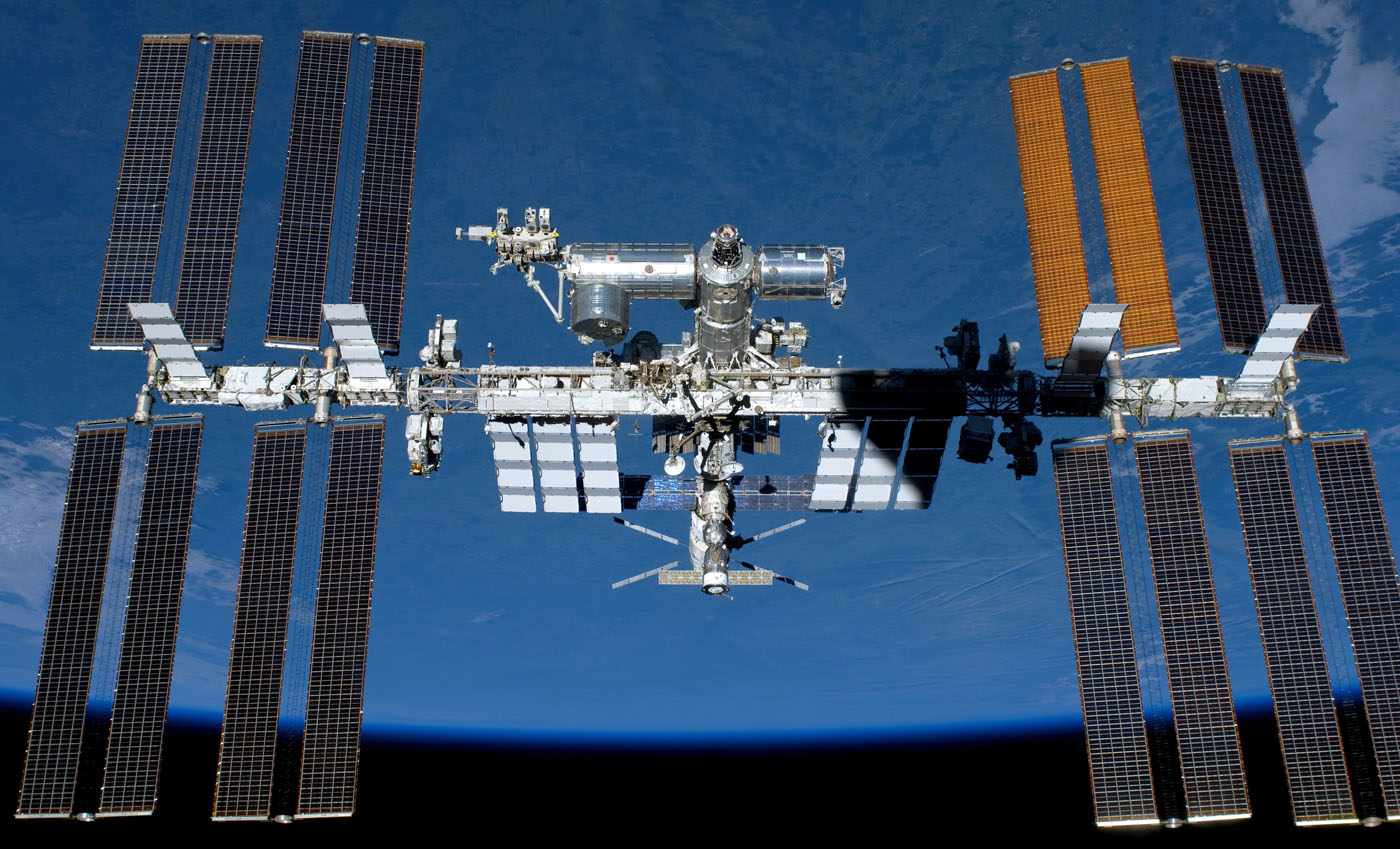
Space is a vacuum. i.e. The lack-of-a-thing that makes a thermos great at keeping your drink hot. A satellite is, if nothing else, a fantastic thermos. A data center in space would necessarily rely completely on cooling by radiation, unlike a terrestrial data center that can make use of convection and conduction. You can't just pipe heat out into the atmosphere or build a heat exchanger. You can't exchange heat with vacuum. You can only radiate heat into it.
Heat is going to limit the compute that can be done in a satellite data centre and radiative cooling solutions are going to massively increase weight. It makes far more sense to build data centers in the arctic.
Musk is up to something here. This could be another hyperloop (i.e. A distracting promise meant to sabotage competition). It could be a legal dodge. It could be a power grab. What it will not be is a useful source of computing power. Anyone who takes this venture seriously is probably going to be burned.